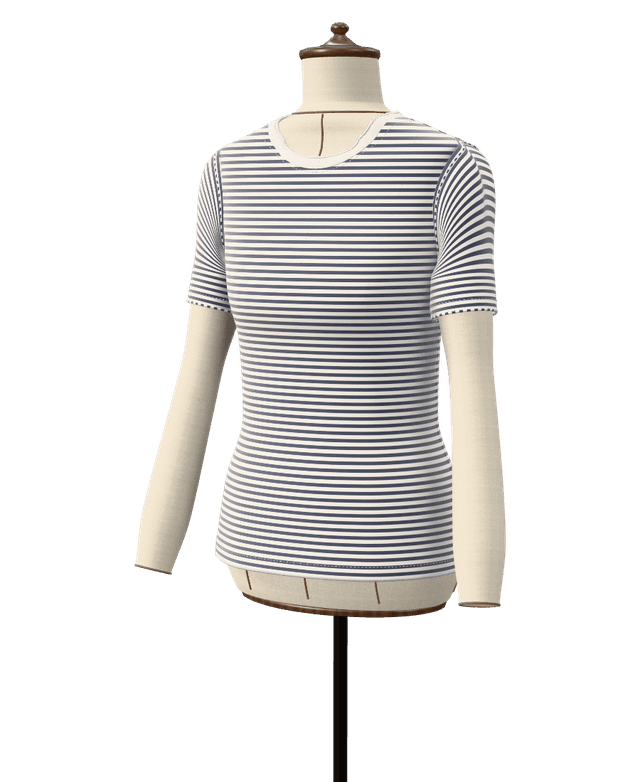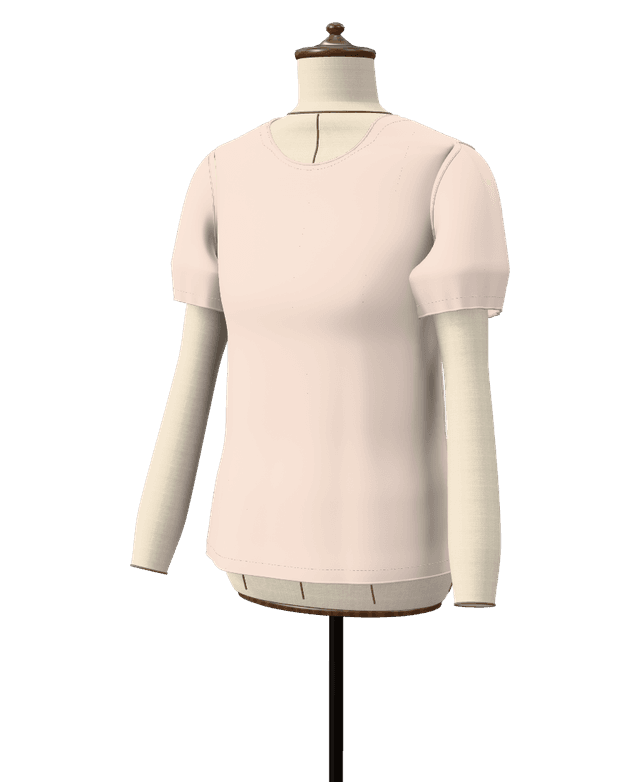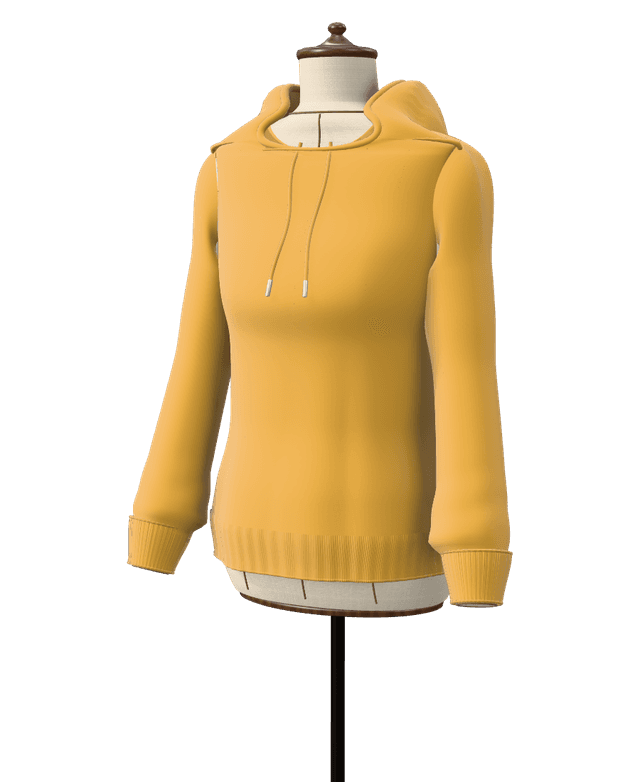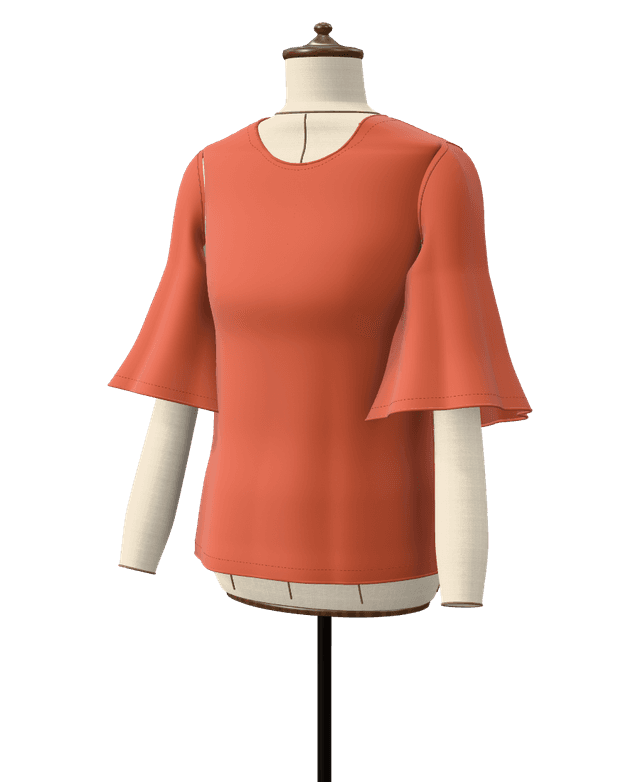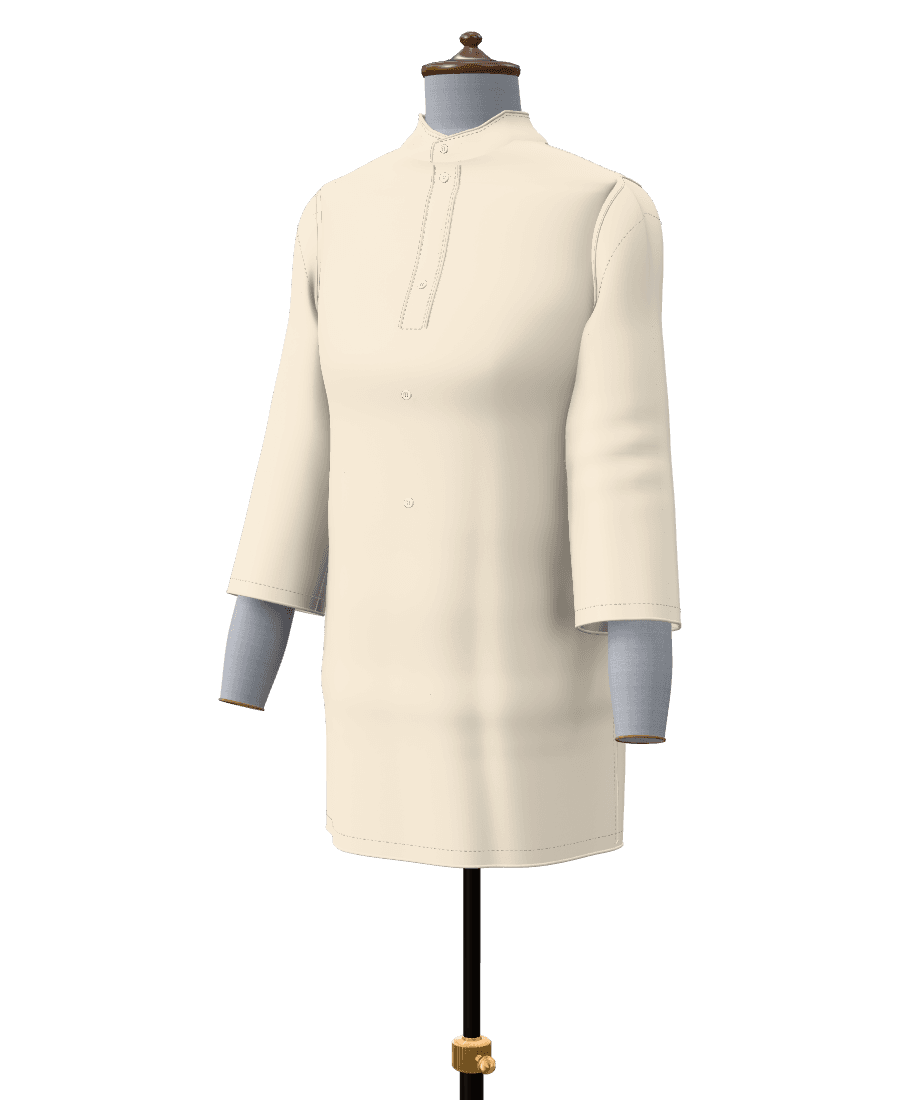
A tunic is a long, loose top worn over trousers or leggings, or on its own over a swimsuit: the linen popover, the kurta, the beach cover-up. Ourlette drafts it from a bodice block with your measurements, a relaxed fit (about 16 cm, or 6 1/4 in, of ease at the bust or chest) and no darts, so it skims the body and pulls on over the head through its buttoned placket. The side slits let it move when you sit.
Tunic options
Every option redraws the pattern instantly, without using any AI:
- Collar: a band (mandarin) collar by default, or none for a plain neckline, a shirt collar on a stand, a camp or a Peter Pan collar.
- Placket: a half placket with four buttons by default; set the number and size, or switch to a full button front, a wrap or no opening.
- Length: thigh by default, from cropped to ankle, with a length adjustment of up to 25 cm (10 in); at knee length it becomes a tunic dress.
- Side slits: 12 cm (4 3/4 in) by default, from 0 to 25 cm (10 in).
- Sleeves: three-quarter and hemmed by default; none, cap, short, elbow or long; straight, puff, bell or bishop; with band or buttoned cuffs.
- Fit: relaxed by default, or fitted, regular or oversized, plus extra chest ease; a flare at each side for a swing shape.
- Pockets: none by default; a chest pocket or patch pockets at the hips.
Made to measure or a standard size
Use your own measurements or a standard size: women's EU 32–54 (US 0–22, UK 4–26), men's XS to 3XL, or children's 2 to 14 years. The tunic is cut straight for every body, so a few measurements (height, bust or chest, waist and hip) are enough; your arm length sets the sleeves and your height the hem.
Best fabrics for a tunic
Light, breathable wovens: linen, cotton voile, double gauze, cotton lawn, chambray, khadi cotton or viscose. Linen gives the beach tunic its drape and softens with each wash; lawn and voile are crisper and cooler. Our post on sewing with linen covers pre-washing and the seams that suit it. The seams are flat-felled by default, which looks good inside an unlined garment.
How hard is it to sew?
A project for a confident beginner: the placket and the band collar are the two steps that ask for care, and both are explained in the guide with your pattern's own numbers. The flat-felled seams take a little longer than plain seams but need no serger. Allow five to six hours; read how to sew a placket first.
What's in the pattern
- Front and back, each cut on the fold
- Two sleeves
- The band collar, cut twice on the fold, with its interfacing
- Two placket strips with their interfacing
Notions: five buttons, 11 mm (7/16 in), four on the placket and one on the collar; light fusible interfacing; topstitching thread. The guide lists every piece with its cut count, the notions, the fabric quantity for 110, 140 and 150 cm (45, 55 and 60 in) wide fabric, and a cutting layout; the fabric chart gives every size.
How to sew a tunic
- Fuse the interfacing to the collar and placket pieces and staystitch the neckline.
- Sew the placket to the front slit, turn it and topstitch.
- Join the shoulders with flat-felled seams and attach the band collar.
- Set the sleeves in flat and sew each side and sleeve seam in one pass, felled.
- Hem the sleeves, sew the side slits and the double-fold hem.
- Make the buttonholes, sew the buttons and press.
Our guide on finishing seams without a serger compares the flat-felled seam with French seams, which suit voile and lawn.
Frequently asked questions
How much fabric do I need for a tunic?
An adult tunic takes 1.5 to 2.1 m (1 5/8 to 2 1/4 yd) of 140 or 150 cm (55 or 60 in) wide fabric depending on the size, and about 1.9 m (2 1/8 yd) of 110 cm (45 in) wide fabric in EU 38, plus 50 cm (20 in) of light interfacing. Ourlette computes the exact quantity for your size, length and fabric width, with a cutting layout.
Can I make it a tunic dress?
Yes. Set the length to knee or calf and the tunic becomes a loose dress that pulls on over the head; keep the side slits for ease of movement, or set them to zero. For a dress with a waist seam, a full button front or sleeves gathered into cuffs, see the shirt dress pattern.
Is this tunic pattern free?
Making the pattern, changing every option and measurement, the 3D preview and the sewing guide on screen are free. Your first PDF is free; after that, printing needs a plan, from Library at $2.99 a month (or $29 a year), which prints the whole catalogue.
Can I make a tunic from a photo?
Yes. Start from this tested pattern and set the collar, placket, sleeves and length yourself to match your photo, or, on the Maker and Atelier plans, upload the photo or paste a Pinterest or Instagram link, and Ourlette's AI pattern maker drafts the tunic in it from scratch. You can change any option by hand afterwards.