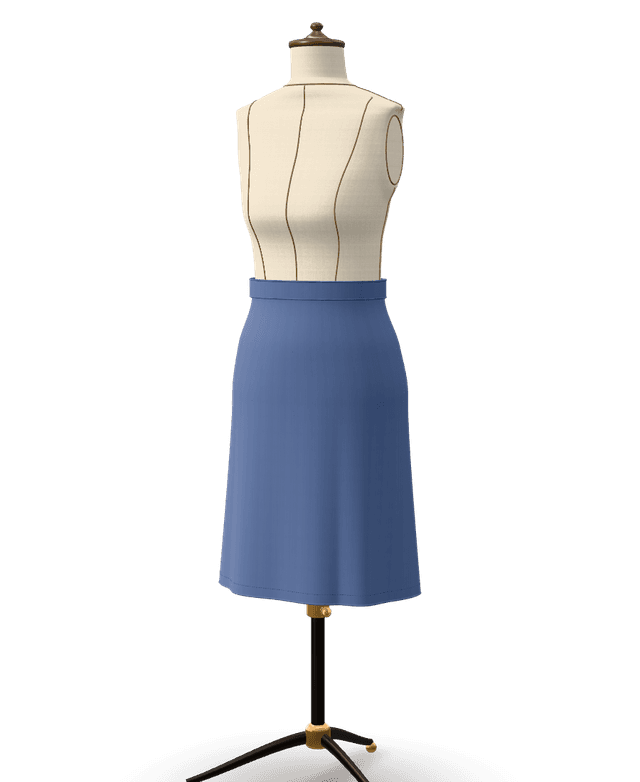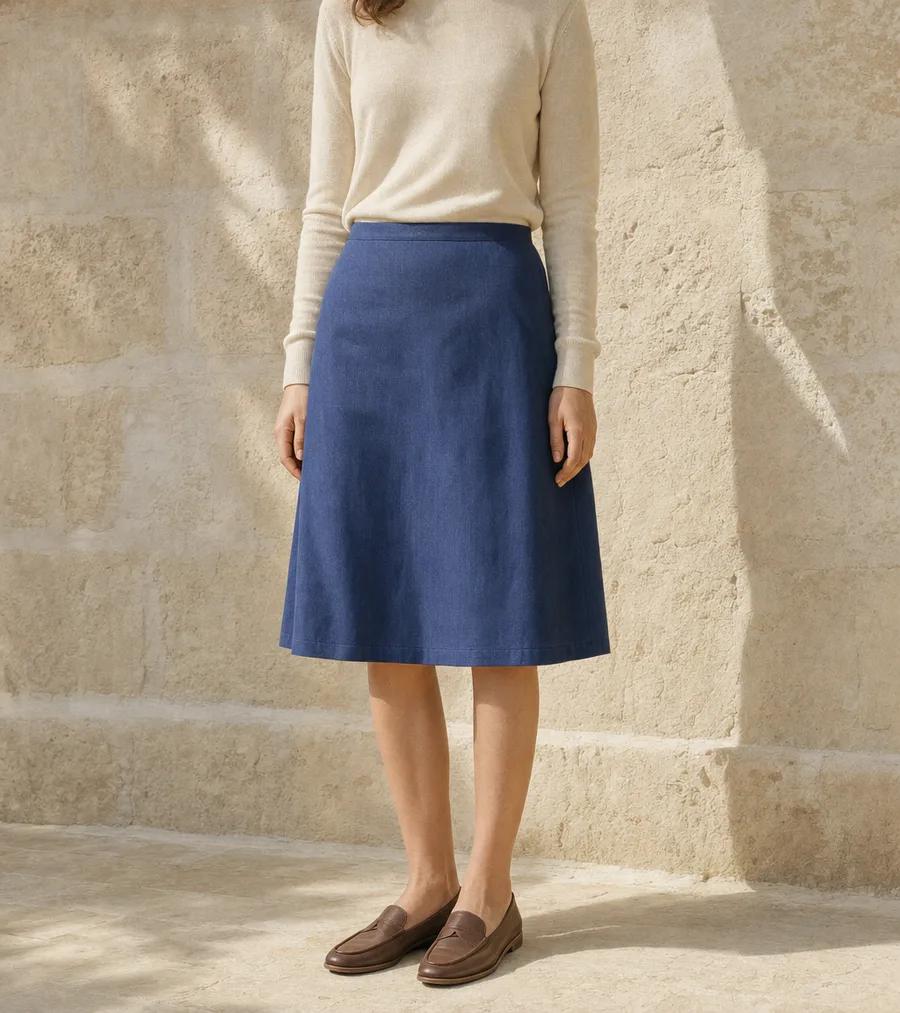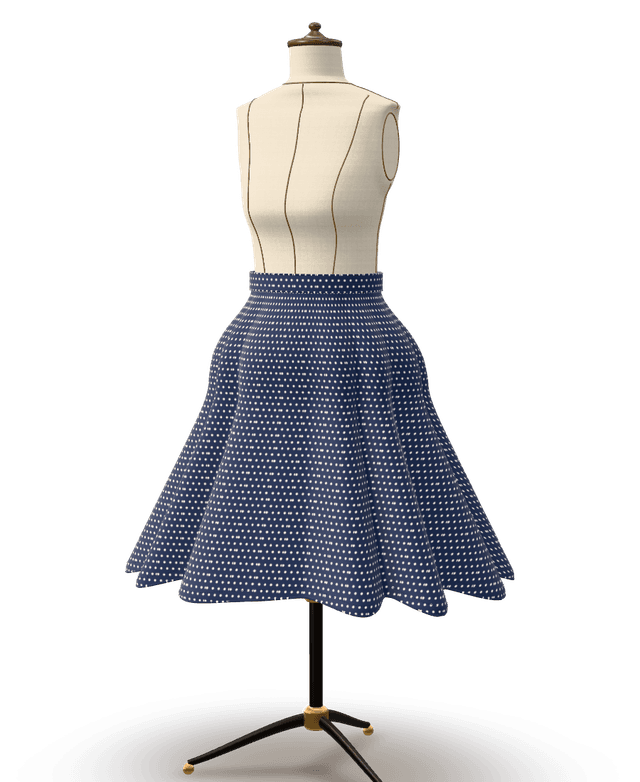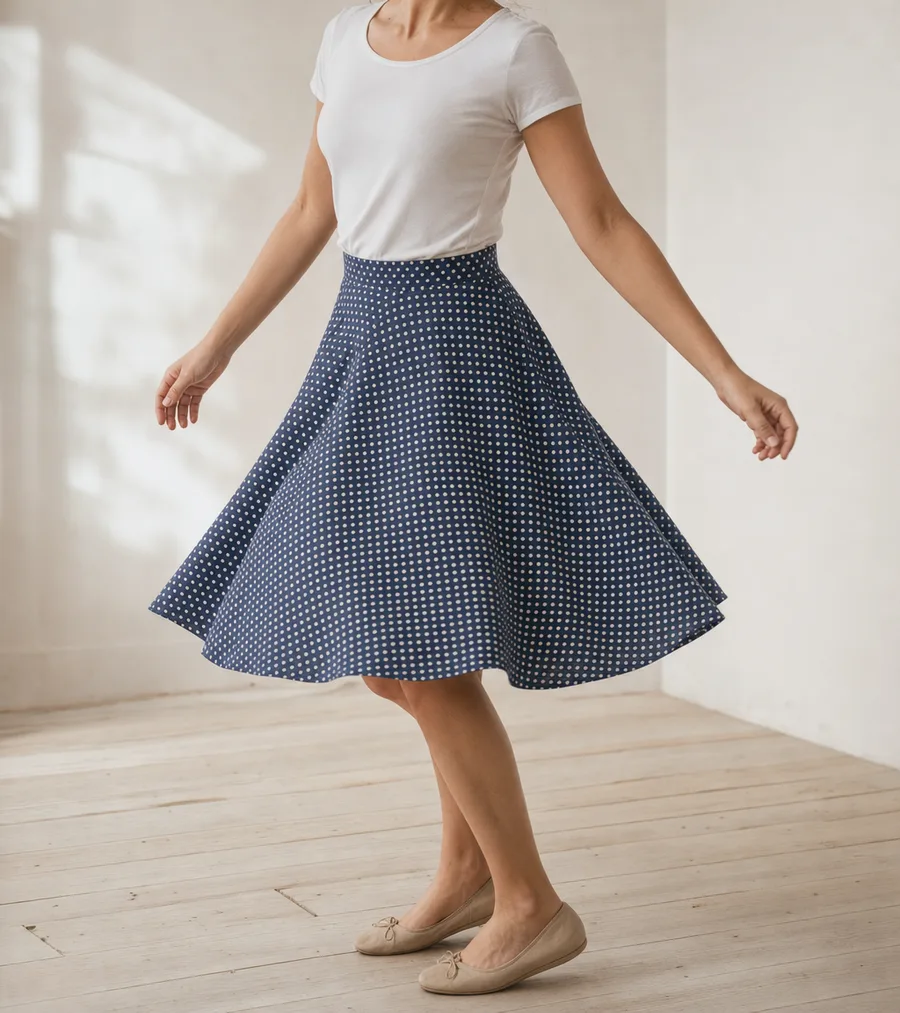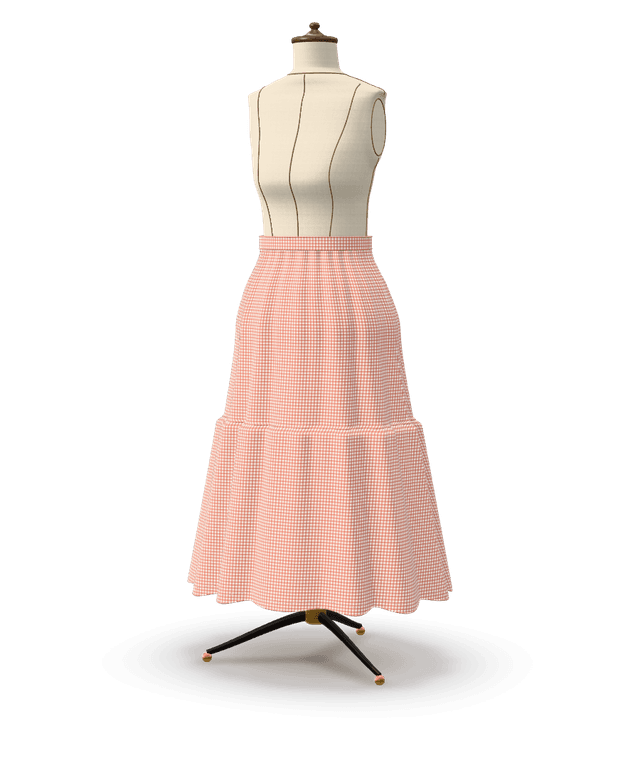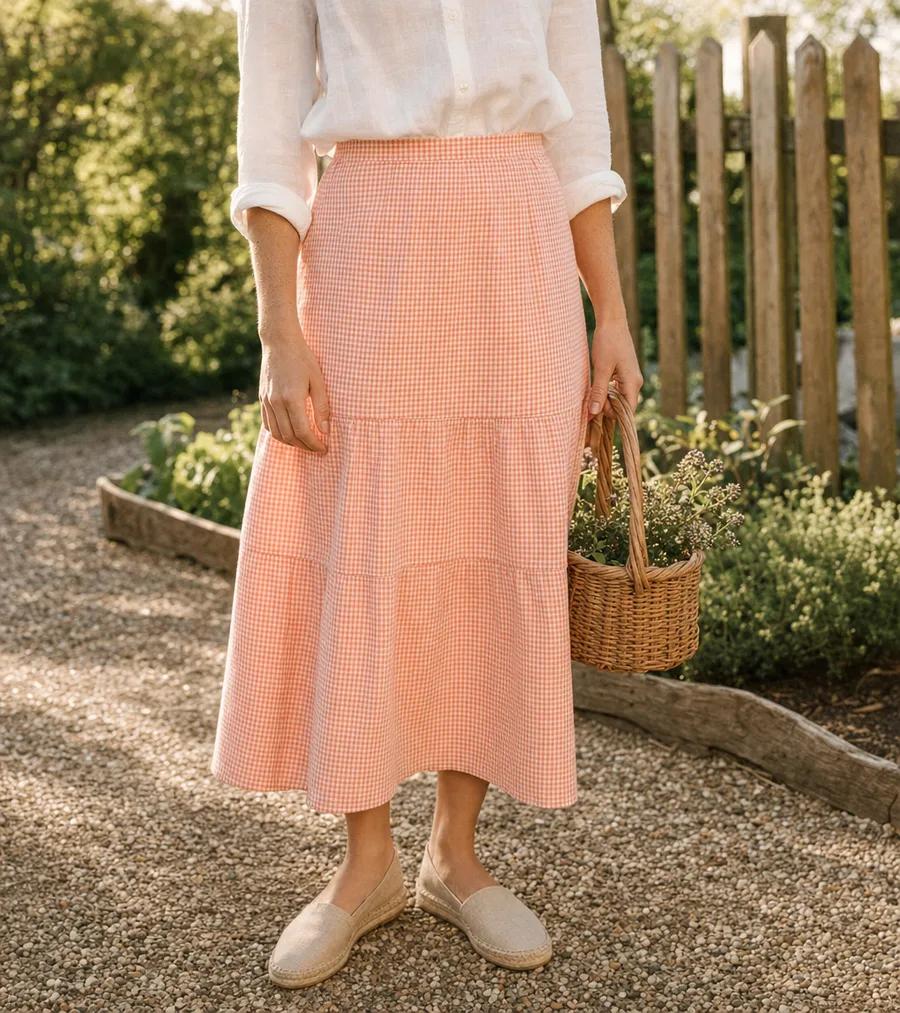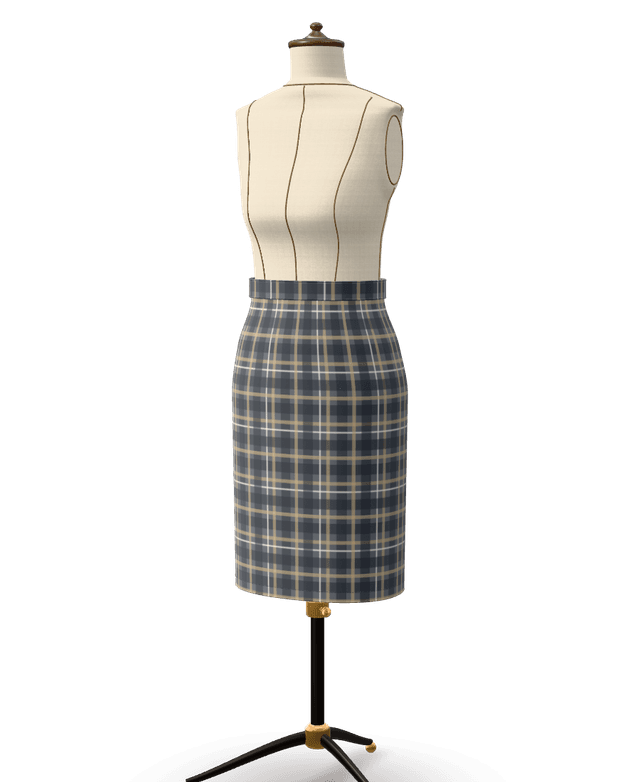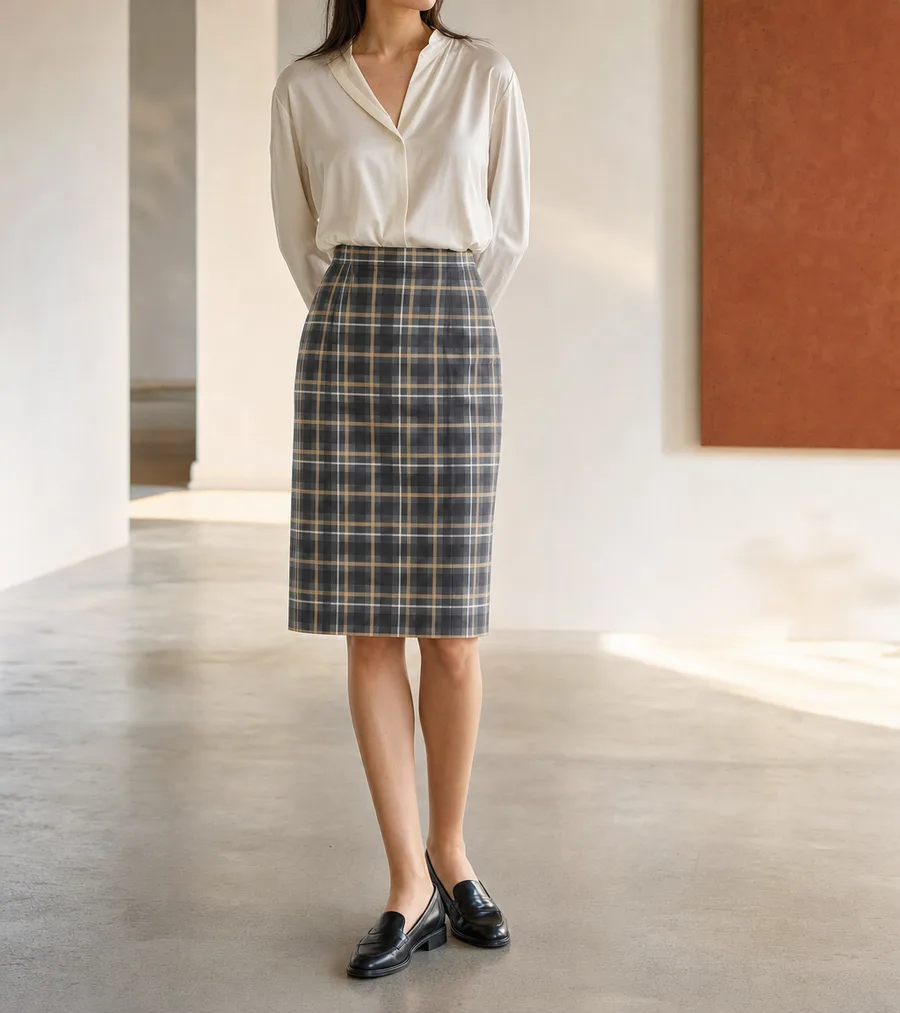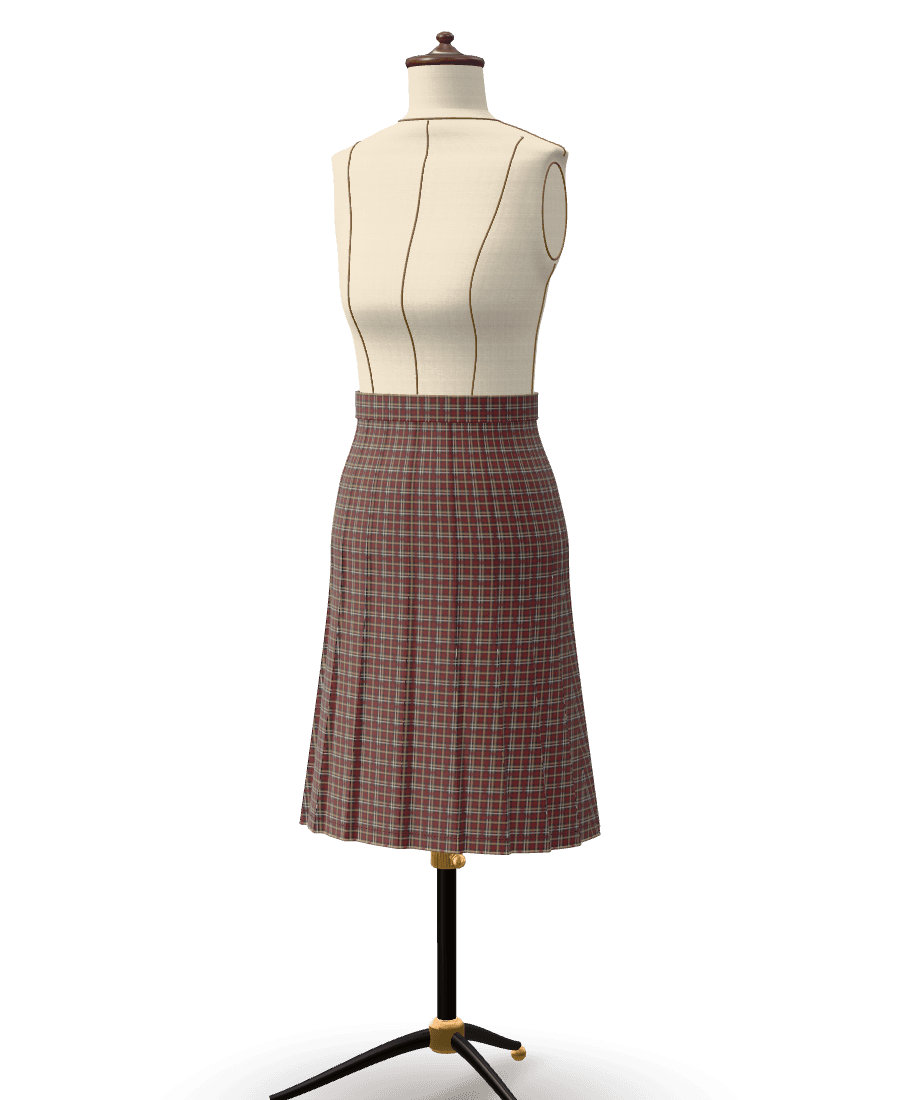
A pleated skirt is fullness folded flat: knife pleats all turned one way, pressed from the waist and stitched down to the hip so the skirt fits smoothly there and opens into movement below. Ourlette drafts the panels from your waist and hip and the pleat depth from the fullness you choose, so every pleat is the same width and the pleats meet exactly at the zip. Shorten it to a tennis skirt, lengthen it to a midi, or switch to box pleats for a school or kilt look.
Pleated skirt options
Every option redraws the pattern instantly, without using any AI:
- Pleats: knife pleats by default, or box or inverted pleats; stitched down to the hip by default, or released at the waist so the skirt stands off the hips.
- Fullness: 2.6 times the waist by default, pleats folded edge to edge; from 1.3 to 3.5, with spaced pleats and flat fabric between them below about 2.
- Length: knee by default; mini (a tennis skirt), above the knee, midi or maxi, with a length adjustment of up to 25 cm (10 in).
- Waist and rise: a straight waistband at the natural waist by default; a contoured band, a faced waist, an elastic or drawstring waist; low, mid or extra high rise; a hip yoke with the pleats sewn below it.
- Closure: an invisible side zip by default; a back zip, buttons down the front, a wrap with ties or pull-on.
- Details: pockets in the side seams or patch pockets; belt loops; a tie belt; a hem ruffle.
Made to measure or a standard size
Use your own measurements or a standard size: women's EU 32–54 (US 0–22, UK 4–26) or children's 2 to 14 years. Your waist and hip set the pleat depth: stitched-down pleats must open exactly at the hip, which a made-to-measure draft gets right where a graded pattern gaps or pulls. Our guide on how to take your body measurements shows the waist and the hip.
Best fabrics for a pleated skirt
Fabrics that hold a crease: wool crepe, gabardine, tartan, wool suiting, cotton poplin or cotton twill; polyester crepe for pleats that survive washing. Pre-wash cottons, since a shrunk pleat never presses straight again. Our post on how to match plaids and stripes at the seams is worth reading if you choose a tartan.
How hard is it to sew?
An easy project with one patient step: folding and pressing the pleats along the marked lines, then stitching them down to the hip. The rest is two seams, an invisible zip and a waistband. Allow four to five hours, half of it at the ironing board. Our post on box, knife and inverted pleats explains how each one folds.
What's in the pattern
- Two pleated skirt panels, with every fold and placement line marked
- The waistband
Notions: an invisible zip, with the length given for your size; a button or a hook and eye for the waistband; fusible interfacing for the waistband. The guide lists every piece with its cut count, the fabric quantity for 110, 140 and 150 cm (45, 55 and 60 in) wide fabric, and a cutting layout; the fabric chart gives every size.
How to sew a pleated skirt
- Fuse the interfacing to the waistband and transfer every pleat line to the fabric.
- Fold each pleat along its lines, press and baste it at the waist.
- Stitch each pleat down from the waist to the hip line, on the fold.
- Sew the side seams, leaving the zip opening, and finish them.
- Insert the invisible zip and attach the waistband.
- Hem with a double fold, press the pleats once more and close the waistband.
Our guide on how to hem covers a hem that keeps the pleats sharp: press the hem first, then re-press the pleats over it.
Frequently asked questions
How much fabric do I need for a pleated skirt?
About 1.5 m (1 5/8 yd) of 140 or 150 cm (55 or 60 in) wide fabric for women's EU 32–46 at knee length, since each pleated panel is cut across the width; from EU 48 the panels no longer fit across and the skirt needs 2.6 to 2.9 m (2 7/8 to 3 1/4 yd). At 110 cm (45 in) wide, count 2.3 m (2 1/2 yd) in EU 38. Ourlette computes the exact quantity for your size, length and fabric width.
Can I make a tennis skirt or a box-pleat skirt with it?
Yes. Set the length to mini and keep the knife pleats stitched to the hip for a tennis skirt; choose box pleats with a fullness of about 2.4 to 3 for a school or kilt-style skirt, or inverted pleats released at the waist for a softer skirt. Every change redraws the panels and the pleat lines.
Is this pleated skirt pattern free?
Making the pattern, changing every option and measurement, the 3D preview and the sewing guide on screen are free. Your first PDF is free; after that, printing needs a plan, from Library at $2.99 a month (or $29 a year), which prints the whole catalogue.
Can I make a pleated skirt from a photo?
Yes. Start from this tested pattern and set the pleats, length and waist yourself to match your photo, or, on the Maker and Atelier plans, upload the photo or paste a Pinterest or Instagram link, and Ourlette's AI pattern maker drafts the skirt in it from scratch. You can change any option by hand afterwards.