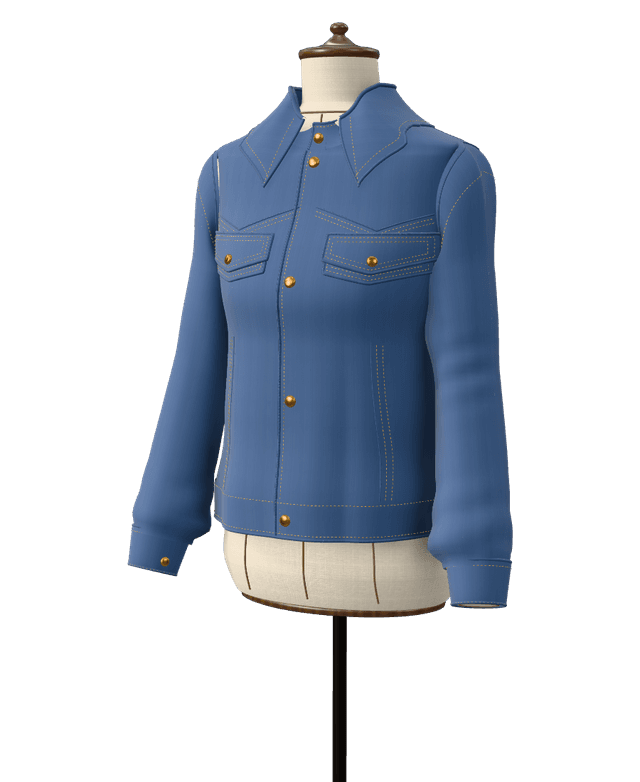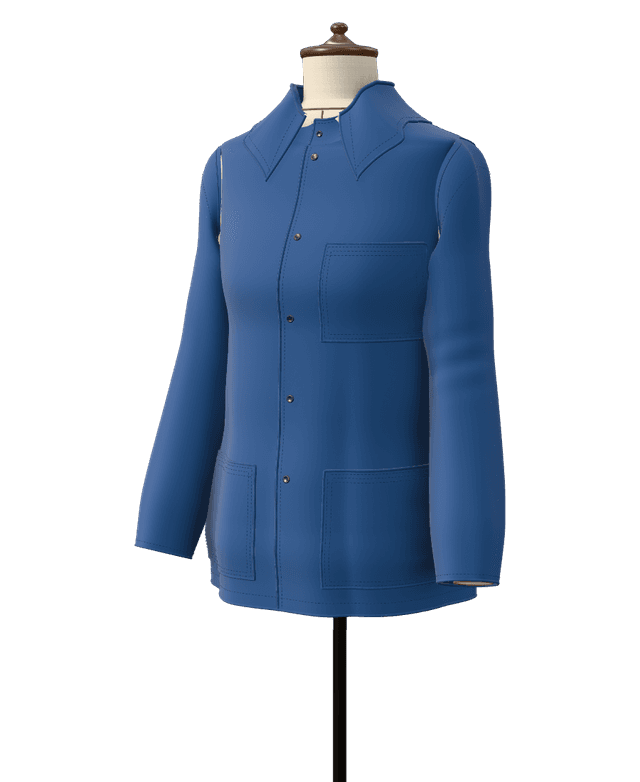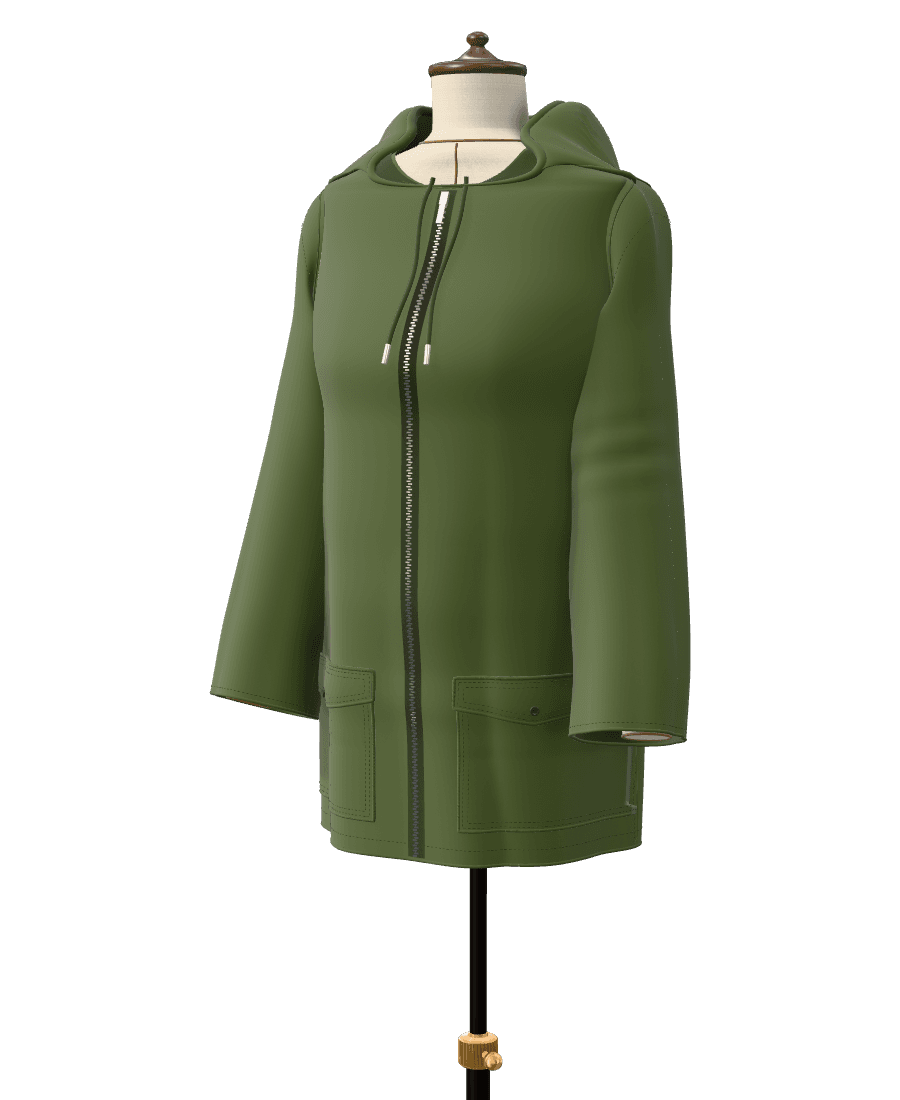
A parka is the everyday coat for rain and cold: a hood, a zip that opens all the way, deep pockets with flaps and a lining you can make warm or light. Ourlette drafts it from a coat block with your measurements and a relaxed fit, with coat ease so it layers over a sweater or a jacket, flat-felled seams for a tough outdoor finish, and a lining in the body, sleeves and hood. In waxed cotton it is a field parka; in ripstop or technical twill, a rain parka.
Parka options
Every option redraws the pattern instantly, without using any AI:
- Length: thigh by default, from hip to knee or calf, with a length adjustment of up to 25 cm (10 in).
- Hood or collar: a lined hood by default; a jacket collar on a stand, a band collar or a plain neckline instead.
- Front: a separating zip by default; buttons, snaps or toggles with a faced front, or a half placket for a pullover anorak.
- Pockets: two patch pockets with flaps by default, with square, rounded, pointed or angled corners and a size from 60 to 150 %; slanted welt hand pockets, a kangaroo pocket or in-seam pockets; one or two chest pockets.
- Sleeves: long, set in and hemmed by default; elastic casings or rib knit cuffs to keep the wind out, two-piece sleeves, roll-up tabs.
- Fit: relaxed by default, or regular or oversized, plus extra chest ease for thick layers; a tie belt or a back yoke if you want them.
- Lining and topstitching: a full lining by default; matching topstitching, contrast, or none for a clean finish.
Made to measure or a standard size
Use your own measurements or a standard size: women's EU 32–54 (US 0–22, UK 4–26), men's XS to 3XL, or children's 2 to 14 years. The parka is cut straight, without darts, for every body; height, bust or chest, waist and hip are enough to start, and your arm length sets the sleeves with room for a sweater underneath.
Best fabrics for a parka
Cotton gabardine, waxed cotton, ripstop, technical twill or a water-resistant canvas for the shell; a quilted lining, fleece or flannel for warmth, or a light lining fabric for a rain parka. Our posts on sewing with twill and sewing with canvas cover needles and heavy seams; waxed cotton sews like canvas but takes no steam.
How hard is it to sew?
A project for an experienced sewist: a long separating zip, a lined hood, flat-felled seams in heavy fabric and a bagged lining. None of the steps is unusual, but there are many, and the fabric is thick. Allow 15 to 20 hours. Our posts on how to sew a flat-felled seam and how to shorten a zip cover two details that come up.
What's in the pattern
- Two fronts, cut as a pair, and a back cut on the fold
- Two sleeves
- The hood, cut as a pair in shell fabric and in lining
- Two patch pockets and four flap pieces
- Two front facings with their interfacing
- Front, back and sleeve linings
Notions: a separating (open-ended) zip, with the length given for your size; metal tack buttons, 23 mm (7/8 in), for the flaps, or snaps; medium-weight fusible interfacing; topstitching thread; jeans needles 100/16 and a topstitch needle 90/14. The guide lists every piece with its cut count, the fabric and lining quantities for 110, 140 and 150 cm (45, 55 and 60 in) wide fabric, and a cutting layout; the fabric chart gives every size.
How to sew a parka
- Fuse the interfacing to the facings, set up for topstitching and practice a flat-felled seam on scraps.
- Make the flaps, sew the patch pockets to the fronts and the flaps above them.
- Join the shoulders, insert the separating zip between the fronts and the facings.
- Assemble the hood and its lining and sew it to the neckline.
- Set the sleeves in flat and sew each side and sleeve seam in one pass, felled; hem the sleeves.
- Assemble the lining, sew it to the facings and the hood, and bag it at the hem.
- Set the tack buttons on the flaps and press.
If you want the hood to cinch, thread a drawstring through its front edge: our post on sewing a drawstring with eyelets applies to a hood too.
Frequently asked questions
How much fabric do I need for a parka?
An adult parka takes 2 to 2.7 m (2 1/4 to 3 yd) of 140 or 150 cm (55 or 60 in) wide shell fabric depending on the size, about 2.6 m (2 7/8 yd) at 110 cm (45 in) in EU 38, plus about 1.9 m (2 1/8 yd) of lining and 1 m (1 1/8 yd) of interfacing. Ourlette computes the exact quantities for your size, length and fabric width, with a cutting layout.
Can I make it a pullover anorak?
Yes. Switch the front to a half placket (popover) and add a kangaroo pocket: the anorak pulls on over the head and closes at the neck with a few buttons or snaps. Keep the hood and the elastic cuffs for the classic look.
Is this parka pattern free?
Making the pattern, changing every option and measurement, the 3D preview and the sewing guide on screen are free. Your first PDF is free; after that, printing needs a plan, from Library at $2.99 a month (or $29 a year), which prints the whole catalogue.
Can I make a parka from a photo?
Yes. Start from this tested pattern and set the length, the pockets, the cuffs and the hood yourself to match your photo, or, on the Maker and Atelier plans, upload the photo or paste a Pinterest or Instagram link, and Ourlette's AI pattern maker drafts the coat in it from scratch. You can change any option by hand afterwards.